Colonoscopy (lower endoscopy)
A colonoscopy is the most accurate and informative method for diagnosing and treating diseases of the colon and rectum.
Book an appointment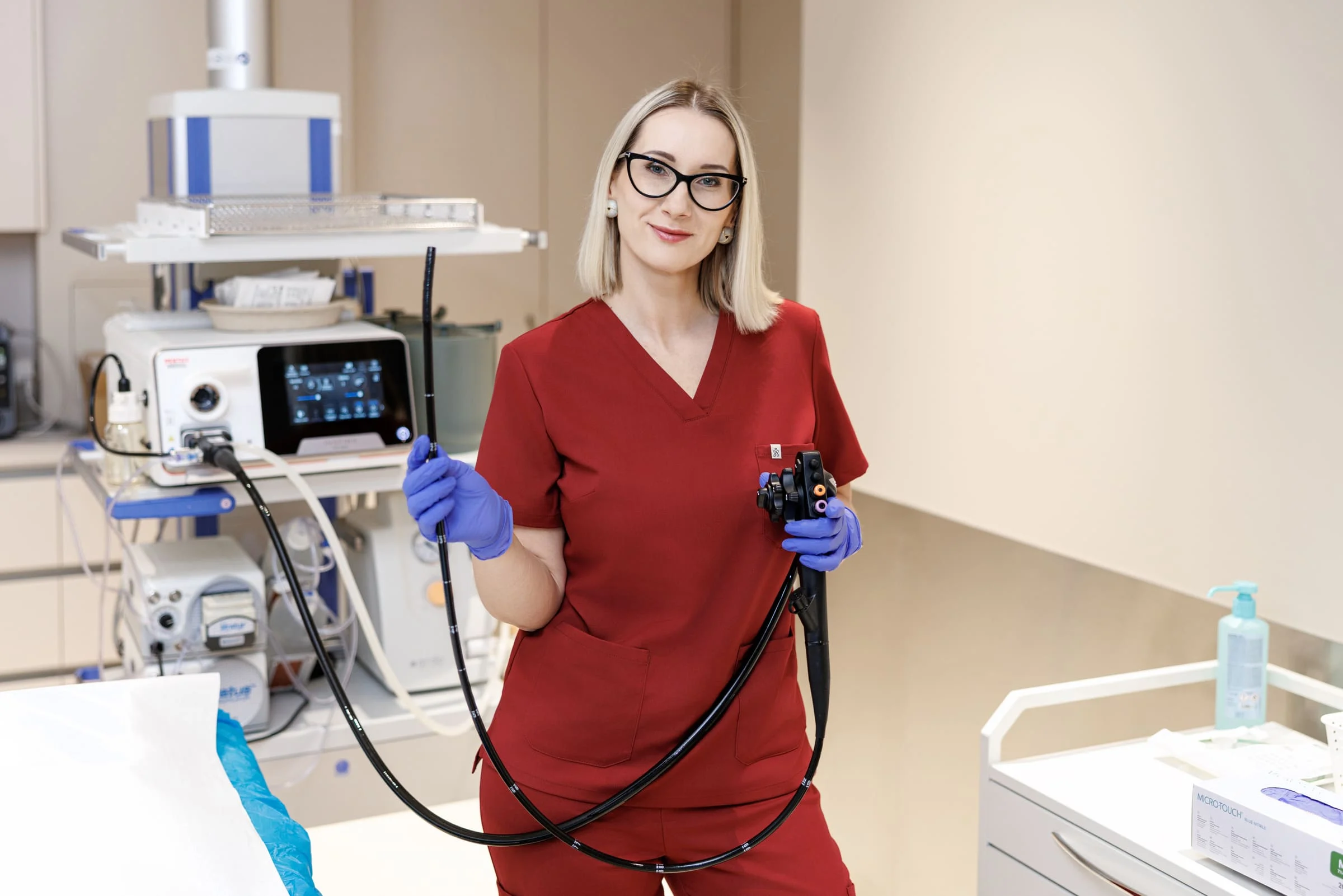
About the service
How to prepare
Preparation instructions
Prices
More about colonoscopy
Colonoscopy is one of the most accurate and informative methods for examining the colon and rectum. It allows the doctor to examine the intestinal mucosa in detail and detect polyps, inflammatory changes, ulcers, sources of bleeding, tumours, and other abnormalities early on – conditions that are not always detectable using other diagnostic methods.
Colonoscopy is not only a diagnostic procedure but, in many cases, also a therapeutic one. During the examination, the doctor can, if necessary, take tissue samples (biopsies) for microscopic examination, as well as remove polyps or perform other endoscopic procedures. Taking a biopsy is usually quick and painless. In the case of larger or more complex polyps, a separate, pre-planned therapeutic procedure may be necessary.
During the examination, a flexible endoscope with high-resolution optics is inserted into the large intestine through the anus. This allows the doctor to view the large intestine up to the caecum and, if necessary, the terminal ileum. Images from the examination are documented, saved, and attached to the report that the patient receives after the procedure.
Colonoscopy, when performed by an experienced specialist using modern equipment, is a safe and low-risk procedure. However, as with any medical procedure, colonoscopy can very rarely lead to complications, such as bleeding after a biopsy or polyp removal, damage to the intestinal wall, or reactions related to sedation. Before the procedure, the patient is informed about the course of the examination, its benefits, and potential risks.
Colonoscopy is typically performed under intravenous sedation, which helps keep the patient calm and comfortable. During sedation, an anaesthesiologist or anaesthesia team administers short-acting medications to make the procedure as comfortable as possible and ensure the patient remembers little or nothing of it. This is not general anaesthesia; the patient usually breathes on their own, but vital signs are continuously monitored during the procedure.
When is a colonoscopy necessary?
A colonoscopy is recommended if there is:
- blood or mucus in the stool;
- a change in stool consistency or frequency – persistent diarrhoea, constipation, or a shift in these symptoms;
- pain or discomfort during bowel movements;
- unexplained weight loss, fatigue, weakness, or lack of energy;
- iron-deficiency anaemia or anaemia of unknown cause;
- a positive faecal occult blood test;
- suspected inflammatory bowel disease or the need for follow-up;
- a family history of colorectal cancer or intestinal polyps;
- previously diagnosed intestinal polyps requiring a follow-up colonoscopy;
- a need for colorectal cancer screening as recommended by a doctor.
How long does the procedure take?
The colonoscopy itself usually lasts about 20–60 minutes, depending on the anatomy of the bowel, the quality of preparation, and whether additional procedures, such as a biopsy or polyp removal, are performed during the procedure.
The total time spent at the clinic is usually about 1.5–2 hours, as a short observation and recovery period is required after sedation.
After the examination
After a colonoscopy, the patient may go home the same day if they feel stable and the medical staff permits it. If the procedure was performed under sedation, for 24 hours after the examination, the patient must not drive a vehicle, operate machinery, make legally or financially significant decisions, or consume alcohol. It is recommended that an adult accompany the patient home after the procedure.
After the examination, you may experience temporary bloating, a sensation of gas, or mild discomfort, which usually resolves on its own. If a biopsy or polyp removal was performed during the colonoscopy, the doctor will provide individual instructions regarding your post-procedure regimen, receiving results, and necessary follow-up.
You should contact your doctor immediately or seek emergency care if you experience severe or worsening abdominal pain, fever, significant rectal bleeding, dizziness, fainting, or a significant deterioration in your well-being after the procedure.
How to prepare for a colonoscopy
A colonoscopy is an important diagnostic procedure that allows for a detailed assessment of the health of the intestinal lining and the early detection of abnormalities. Proper preparation is essential to ensure that the examination proceeds successfully and yields accurate results.
Bowel preparation
Before a colonoscopy, bowel cleansing must be performed using a preparation prescribed by a doctor or clinic. The preparation regimen may vary depending on the preparation and the time of the examination, so you must carefully follow the instructions provided specifically to you.
Recommendations during preparation
Drink the bowel cleansing solution slowly, in small sips, according to the specified schedule. To reduce the unpleasant taste, the solution can be taken chilled or drunk through a straw. If you experience nausea or discomfort, you may stop drinking for 20–30 minutes and then continue more slowly.
During preparation, stay at home, near a toilet, and drink plenty of permitted fluids.
If you are using Picoprep for preparation:
The day before the examination at 6:00 p.m.
Dissolve the Picoprep packet in a glass of water, drink it, and then slowly drink at least 5 glasses of clear, transparent liquid until bedtime.
On the day of the examination
Dissolve the Picoprep packet in a glass of water and drink it 5 hours before the colonoscopy. Afterwards, drink at least 3 additional glasses of clear, transparent liquid.
Stop drinking 2 hours before the colonoscopy.
Diet before the examination
A low-fibre (low-residue) diet is recommended 3–5 days before a colonoscopy.
During this time, you should avoid foods that contain fibre, seeds, nuts, skins, or grains, such as:
tomatoes, cucumbers with skin, plums, berries, grapes, kiwis, whole-grain products, seeds, nuts, legumes, cabbage, lettuce, and mushrooms.
You may eat easily digestible, fibre-free foods such as:
white rice, peeled potatoes, white bread, pasta made from white flour, eggs, cottage cheese, plain yogurt, milk, cheese, white meat, chicken/turkey, white fish, clear broth without solids, bananas, etc.
You must not eat anything the day before the colonoscopy. You may only drink clear fluids: water, tea without milk, clear apple juice, Sprite, and clear broth without solids.
Medications
Before the examination, inform your doctor or the clinic if you are taking blood thinners, diabetes medications, insulin, iron supplements, anti-diarrhoeal medications, opioid painkillers, or other regularly used medications.
Do not stop taking any medication on your own; you must consult with your doctor regarding their use before the colonoscopy.
On the day of the examination
Colonoscopy is usually performed under intravenous sedation to ensure the procedure is as comfortable as possible. During sedation, the patient usually breathes on their own, but vital signs are continuously monitored.
Please bring the following to your appointment: a valid ID, a referral (if one is required), the results of any previous examinations, and a list of the medicines you are taking.
Wear comfortable clothing and leave valuables at home.
After the procedure
After the examination, the patient can usually go home the same day, provided they feel stable. If the procedure was performed under sedation, you must not drive a vehicle, operate machinery, consume alcohol, or make important decisions for 24 hours. It is recommended that an adult accompany you home after the procedure.
If you experience severe abdominal pain, fever, significant bleeding, dizziness, fainting, or a significant deterioration in your condition after the examination, contact your doctor immediately or seek emergency medical care.
If you have any questions, please contact Dr. Vilkoite’s Digestive Health Clinic during opening hours; our staff will provide detailed information about the preparation steps and the use of bowel cleansing agents.
Preparation instructions for a colonoscopy
Date of the procedure
Instructions (PDF)
To receive specific preparation instructions, please provide the date and time of the procedure.
Diet before the examination
21.10 18:11-23.10 18:11 A low-fibre (low-residue) diet is recommended 3 to 5 days before a colonoscopy.
During this time, avoid foods that contain fibre, seeds, nuts, skins, or grains, such as:
tomatoes, cucumbers with skin, plums, berries, grapes, kiwis, whole-grain products, seeds, nuts, legumes, cabbage, lettuce, and mushrooms.
You may eat easily digestible, fibre-free foods:
white rice, peeled potatoes, white bread, pasta made from white flour, eggs, cottage cheese, plain yogurt, milk, cheese, white meat, chicken/turkey, white fish, clear broth without solids, bananas, etc.
You must not eat anything the day before the colonoscopy. You may only drink clear fluids:
water, tea without milk, clear apple juice, Sprite, clear broth without solids.
Bowel preparation
21.10 18:11-23.10 18:11 (3–5 days before the procedure)
The day before the colonoscopy, bowel cleansing is performed using special preparations prescribed by the doctor. A well-cleansed bowel is a prerequisite for a high-quality examination and accurate diagnosis.
Recommendations during cleansing:
- Drink the solution slowly, in small sips, following the schedule prescribed by your doctor.
- To reduce the unpleasant taste, you can use a straw or drink the solution very cold.
- If necessary, you can use fresh lemon juice to improve the taste.
- If you experience discomfort or nausea, stop drinking for 20–30 minutes.
- If necessary, consult your doctor or nurse.
Before the procedure:
- A colonoscopy is performed under short-term anaesthesia to ensure complete comfort.
- You must not drive for 12 hours after the procedure, so it is recommended that a family member or friend accompany you.
- You must bring a referral from your family doctor or specialist, as well as a valid ID (passport or ID card).
- Do not eat solid food or drink coloured liquids (juices, coffee with milk, etc.) before the examination.
When coming to the clinic:
- Wear loose, comfortable clothing that allows you to move easily.
- Leave jewellery, watches, and other valuables at home.
- You may bring personal hygiene items and wet wipes.
- Please arrive at the clinic at the scheduled time to allow sufficient time for registration and preparation.
After the procedure
After the examination, the patient can usually go home the same day, provided they feel stable.
If the procedure was performed under sedation, you must not drive, operate machinery, consume alcohol, or make important decisions for 24 hours. It is recommended that an adult accompany you home after the procedure.
If you experience severe abdominal pain, fever, heavy bleeding, dizziness, fainting, or a significant deterioration in your condition after the examination, contact your doctor immediately or seek emergency medical care.
If you have any questions, contact Dr. Vilkoite’s Digestive Health Clinic during opening hours – our staff will provide advice and detailed information on the preparation steps and the use of bowel cleansing agents.
Pricing
Examinations
Upper endoscopy (oesophagogastroduodenoscopy) with short sedation and biopsy
365,00 €
Lower endoscopy (colonoscopy) with short sedation and biopsy
445,00 €
Upper and lower endoscopy with short sedation and biopsy
750,00 €
Sedation (for upper or lower endoscopy)
90,00 €
Sedation (for upper and lower endoscopy)
120,00 €
Histological analysis of biopsy samples (per examination)
45,00 €
Endoscopic removal of at least one small polyp (<5 mm) or lesion
70,00 €
Endoscopic removal of at least one medium polyp (5–10 mm) or lesion
120,00 €
Endoscopic removal of at least one large polyp (>10 mm) or lesion
200,00 €
Small bowel video capsule endoscopy
800,00 €
96-hour oesophageal pH monitoring with a wireless capsule
680,00 €
Ultrasound of the abdominal organs
85,00 €
Thyroid ultrasound
80,00 €
Ultrasound of superficial organs and tissues
80,00 €
Liver elastography
80,00 €
13C urea breath test (H. pylori)
100,00 €
Lactose intolerance hydrogen breath test
85,00 €
Lactulose breath test for oro-caecal transit time
85,00 €
Glucose hydrogen breath test for SIBO (intestinal dysbiosis)
85,00 €
Bioimpedance
30,00 €
Specialists
Why choose us?
We offer comprehensive digestive health care in one place and in a peaceful environment – from diagnosis to treatment and prevention.

The best experts in digestive health
We specialise specifically in the care of gastroenterology patients, combining our expertise in the stomach, liver, pancreas, intestines, and the microbiome.

Everything you need for digestive health, in one place
We provide a full range of diagnostic and treatment services under one roof – everything you need for your digestive health is available in one place.

A multidisciplinary team of specialists
We have gastroenterologists, hepatologists, endocrinologists, psychologists, nutritionists, neurologists, and other specialists who work together to provide a holistic approach to health.

A personalised approach for each patient
We will develop a personalised treatment plan that includes both medication and dietary and lifestyle changes.

We use state-of-the-art technology
You will receive accurate diagnosis and treatment based on the latest international guidelines and research, using state-of-the-art technology.

A calming and pleasant environment
The clinic offers a comfortable, peaceful, and welcoming environment that helps ease any anxiety you may feel before your examination. The thoughtfully designed interior, the professional attitude of our staff, and our compassionate communication will help you feel safe and supported.
Frequently asked questions
What are the clinic’s opening hours?
Where is the clinic located?
How do I get to the clinic?
Is free parking available for clinic patients?
Is the clinic accessible to people with disabilities?
How should I prepare for an endoscopy?
How should I prepare for a colonoscopy?